
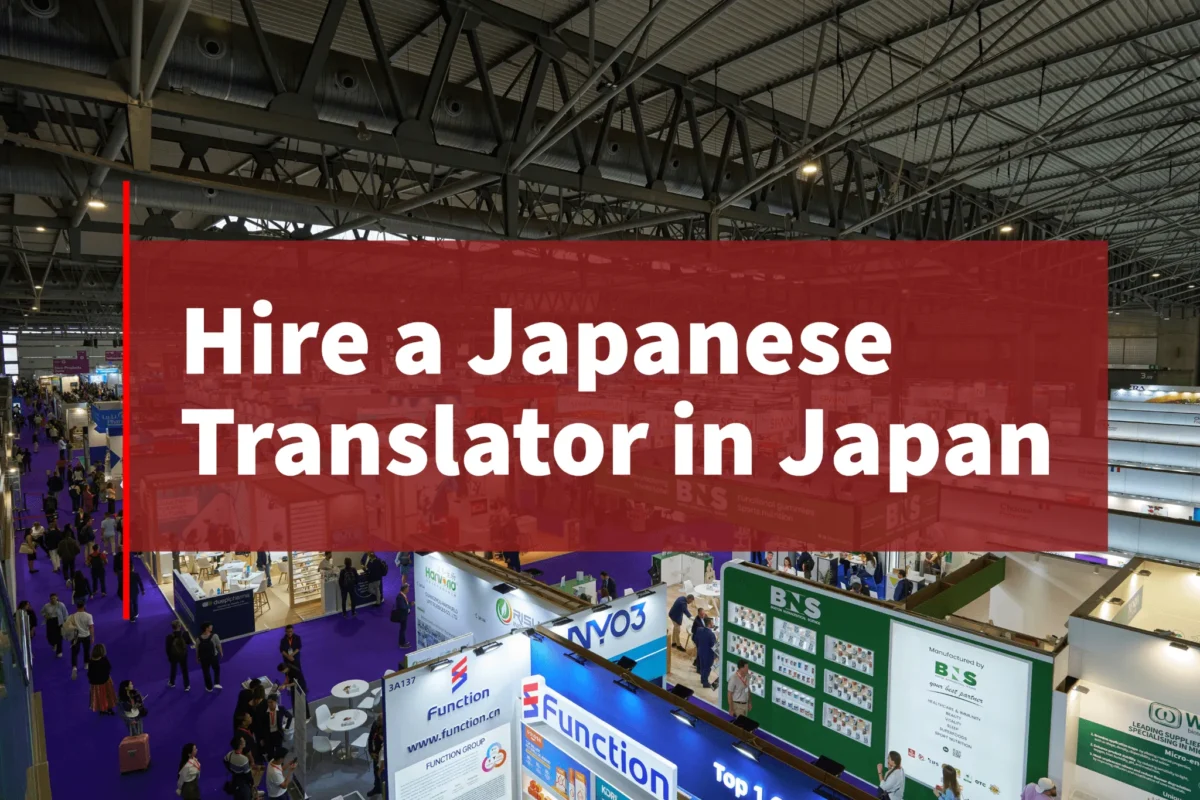
If you’re looking to hire a Japanese translator in Japan, you may actually need an interpreter instead. Translators usually work with written content, while interpreters help with spoken communication in real time.
Depending on your situation, you may also need a local assistant who can support you at a business meeting, trade show, expo, or during everyday situations in Japan.
This guide explains the differences, typical costs, where to hire someone, and which option may suit your needs best.
- Translator or Interpreter: Which Do You Actually Need in Japan?
- How Much Does It Cost to Hire a Translator or Interpreter in Japan?
- Where Can You Hire a Japanese Translator or Interpreter?
- How to Choose the Right Translator or Interpreter
- Do You Need a Certified or Licensed Interpreter in Japan?
- When a Local Interpreter or Japanese Assistant Makes More Sense
- When You Should Hire a Specialist Interpreter
- How to Hire a Japanese Translator or Interpreter Step by Step
- Final Thoughts: Choose the Service Based on What You Need Help With
- FAQ
Translator or Interpreter: Which Do You Actually Need in Japan?
If you need help with written Japanese, you need a translator. If you need help with spoken communication in real time, you need an interpreter. If you need someone to stay with you and help with practical situations in Japan, a guide or local assistant may be a better fit.
When You Need a Translator
A translator works with written content such as documents, emails, websites, business materials, and product information.
For legal, technical, or other specialized documents, choose someone with relevant experience in that field.
When You Need an Interpreter
An interpreter helps with spoken communication in real time. This may include business meetings, appointments, interviews, events, negotiations, or conversations.
For medical, legal, technical, or high-stakes business situations, a specialist interpreter may be the better choice.
What About a Guide or Local Assistant?
A guide or local assistant can help when you need practical support beyond direct translation. This may include shopping, restaurants, reservations, local activities, business visits, expos, or trade shows.
In these situations, flexibility, local knowledge, and the ability to communicate with people in Japanese can be just as important as translating every word.
→ How to Hire a Private Tour Guide in Japan.

How Much Does It Cost to Hire a Translator or Interpreter in Japan?
Published prices vary depending on the type of service, language pair, subject matter, and duration. Written translation is usually charged per word or character, while interpretation and guide services are more commonly charged by the half day or full day.
| Service | Current Published Price Example | Pricing Unit |
|---|---|---|
| Japanese → English Translation | ¥9–¥25 | per Japanese character |
| English → Japanese Translation | ¥15–¥22 | per English word |
| Professional Interpreter | ¥50,000+ | up to 4 hours |
| Professional Interpreter | ¥80,000+ | up to 8 hours |
| Guide Interpreter | ¥20,000–¥35,000 | 4 hours |
| Guide Interpreter | ¥30,000–¥50,000 | 8 hours |

Where Can You Hire a Japanese Translator or Interpreter?
There are several ways to find language support in Japan, depending on what you need. The best place to look is different for document translation, professional interpretation, sightseeing, and everyday in-person assistance.
- Translation agencies – Best for documents, business materials, and specialized written translation.
- Freelance platforms – Useful when you want to compare individual translators or interpreters by language, experience, and rate.
- Professional interpreter associations – A good option for business, conference, or specialist interpretation.
- Guide interpreter services – Suitable for sightseeing, cultural explanation, and travel support.
- Local guide or assistant services – Useful when you mainly need someone to accompany you, communicate in Japanese, and help with practical situations during your stay.
Need help at a trade show, meeting, or business visit in Japan?
How to Choose the Right Translator or Interpreter
Choosing the right person depends on what you need help with. A good translator or interpreter should have the right language skills, relevant experience, and a service style that matches your situation.
- Check the language pair – Make sure they regularly work with Japanese and your language in the direction you need.
- Look for relevant experience – Business meetings, tourism, medical appointments, legal matters, and everyday travel support all require different skills.
- Check whether they work in person – Some translators only handle written work or remote interpretation.
- Ask about location and availability – This matters if you need someone to accompany you in Tokyo, Kyoto, Osaka, or another part of Japan.
- Confirm what the price includes – Check for transportation, overtime, waiting time, and cancellation fees.
- Read reviews or references – Look for feedback from people who used the service for a similar purpose.
For specialist situations such as legal, medical, technical, or high-stakes business communication, relevant professional experience should matter more than price alone.

Do You Need a Certified or Licensed Interpreter in Japan?
Not always. Since 2018, people without the national guide interpreter qualification can also provide paid guiding and interpretation services in Japan.
However, only registered professionals can use the title National Government Licensed Guide Interpreter.
What Is a Licensed Guide Interpreter?
A National Government Licensed Guide Interpreter has passed Japan’s national exam and is registered with a prefectural government.
The qualification covers foreign-language ability and knowledge of Japanese history, geography, culture, and tourism.
When You Do Not Need a Licensed Interpreter
For shopping, restaurants, casual sightseeing, and general travel support, a licensed guide interpreter is usually not necessary.
Practical communication skills, local knowledge, and flexibility may matter more.

When a Local Interpreter or Japanese Assistant Makes More Sense
A local Japanese assistant can be useful when you need flexible, practical support rather than formal interpretation. This may include trade shows, business visits, networking, visiting suppliers, shopping, restaurants, or other situations where plans may change during the day.
In these cases, local knowledge, flexibility, and practical communication can be just as important as formal interpreting skills.

When You Should Hire a Specialist Interpreter
A specialist interpreter is the better choice when accuracy, subject knowledge, or formal communication is critical. This includes legal matters, medical consultations, technical discussions, contract negotiations, formal conference interpreting, and high-stakes business meetings.
In these situations, relevant professional experience is usually more important than flexibility or price.
How to Hire a Japanese Translator or Interpreter Step by Step
- Decide what type of help you need — written translation, live interpretation, or in-person travel support.
- Define the task clearly — explain the language, purpose, and situation.
- Confirm the date, location, and duration — especially for in-person interpreters and local assistants.
- Check relevant experience — look for someone who has handled similar situations before.
- Confirm the total price — including transportation, overtime, and any additional fees.
- Share important details in advance — this helps the translator or interpreter prepare properly.

Final Thoughts: Choose the Service Based on What You Need Help With
The right choice depends on what you actually need help with. Use a translator for written content, an interpreter for real-time conversations, and a specialist interpreter when accuracy or technical knowledge is critical.
If you need someone who can stay with you and adapt throughout the day, a local Japanese assistant may be a better fit. This can be especially useful for expos, trade shows, networking events, business visits, shopping, restaurants, or moving between meetings.
Start with the situation, then choose the service that matches it.
Tell us your schedule and what kind of support you need.
FAQ
eSIM Japan tips Matcha Nightlife onsen private tour solo trip travel buddy
Hire a Japanese Translator in Japan: Cost, Interpreter Guide

Things to Do in Tokyo with Teens: 15 Ideas They’ll Love
Kyoto Private Tour with Kids: Best Options for Families

Founder of Rental Japanese / Tokyo-based
Guided 500+ guests from more than 30 countries.
Specializes in customized private tours, local bar hopping, onsen experiences, and flexible Tokyo day trips with English support.
All information in this article is based on real on-the-ground guiding experience in Tokyo.